


Delightful sensations,
Gave birth to feelings,
And exhausted itself
To dry emotions.
The loving and the hating,
Limped on broken limbs…
And sensations of pleasure,
Were a bondage
Of the creeping pain.
–Benita Patnaik
Delightful sensations,
Gave birth to feelings,
And exhausted itself
To dry emotions.
The loving and the hating,
Limped on broken limbs…
And sensations of pleasure,
Were a bondage
Of the creeping pain.
–Benita Patnaik

Sunlight crept in stealthily,
Wrapped itself, round and around
Darkness.
Shadows tip-toed out softly,
Unraveled themselves, open and about
Light.
Memories, dusty shook themselves
Jumped, frolicked, out and outside
History.
Unhappiness paused for a moment,
Kicked discontentment over and inside
Now.
Feelings buckled again, kneeling,
Pleading, praying over and over, in
Circles.
Fate strutted out cocksure
Laughed, gibed, tickled and teased
Destiny.

Benita Patnaik
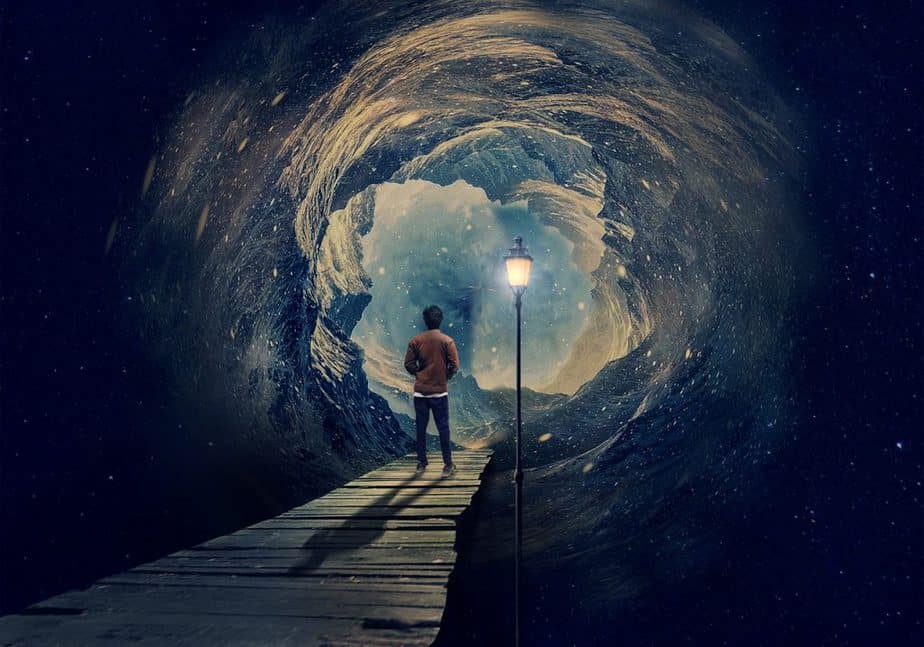
“I was dressed in a red bridal sari. I walked with bowed head towards the mandap; the shehnai was loud and clear. I could see the pink turbaned head of all the men folk and the colourful saris glittering under the neon light. Suddenly, there was silence and I watched everyone turn in slow motion towards the entrance, which framed a wild looking, but beautiful girl dressed in pink – all in pink.
“Stop this marriage!”
The stunned pundit looked up enquiringly at a man (my father?).
I looked up and my veil fell off my bowed head.
From somewhere a shot rang out and the girl crumpled to her feet, clutching her heart.
I looked triumphantly at someone……………” – “Real Dreams”
The use of dreams in a narrative whether its fiction or real time, is a tool many writers have used over the ages. Dreams, we have been told is our subconscious mind trying to make sense of multiple experiences in our life. The mind simply takes episodes from life puts them, say into a glass jar and shakes them up (whether its random or not has not been proven!) and then pours it out into our sleeping mind in an absolutely new procession of thought.
I have used the dream sequences in my book “Real Dreams” to heighten the mystery surrounding the life of the protagonist and to give the readers a clue to what might have or will happen. As a tool it is sharp, straight and highly effective- instead of explaining things through a huge rigmarole, the short sharp narration tells us a lot, using minimum number of bytes.

“In the Freudian model, the dream gives expression to prior, unconscious dream thoughts (Freud [1900] 1953). From a neurobiological perspective, however, there is no further regression of meaning, because dreams arise from the activation of the forebrain by periodic neuronal activity in the brain stem (Hobson & McCarley 1977). “
We have a million pages on the internet about interpretation of dreams. How practical and cognitive they are is up to the reader’s own identification to what is happening around him. People tend to like, appreciate and believe in things with which they can find a comfortable parallel in their lives. So, what exactly are dreams and how do we find meaning for them?

Are they just chemicals in our brain playing around with our senses and creating holograms? Or are they divine manifestation of God conversing with us (sometimes warning us; sometimes auguring about good times to come)? Or just the tired brain regurgitating some memories to make place for new?
I feel they are all this and more. It is therefore not surprising that even in the epics of Mahabharata and Iliad we have multiple instances of dreams portending the future or using the past to explain certain events.
Films of course have used dreams exclusively for their visual pleasure; to explore the unknown and spiritual aspect of life. Thus, we have a number of horror movies based on dreams; many crime-based movies use dreams to psychoanalyze the perpetrator’s actions; even romantic movies delve into this parallel world to create softness, desire and longing.

What actually makes “dreams” such a flexible and attractive tool? It actually blurs reality and logic. We do not have to follow the dictates of science, logic or social rules, all because it is not supposed to be real! Using this, the creator can state events or thought process without having to cross the “Ts” and dot the “i s”. he can also mould the narrative to enhance the experience of using all our senses.
Dreams are mostly nonlinear narratives. They follow the ‘stream of consciousness’ model; sometimes our mind jumps like a monkey from one branch to other, seemingly without any connection. But if we were to research the dreams, we would find that there is one. A journey on a boat could take us to a bar and then unto a jump from a cliff. On the surface unconnected but look deep we have “Water-drink-suicide”, one could follow the other in a logical manner. I was thinking of the beautiful landscapes of England and then my mind took me to a trek that I had taken years ago and then on to a conversation on hot wine! Everything unrelated but very normal when you think of your thoughts in solitary experience. No wonder they say that “mind is faster than the speed of light!
It would be great to explore this tool in infinitesimal ways and use it to further a narrative, embellish the atmosphere or to simply paint the scenery in different hues. Imagine a world where dreams foretell or foreshadow and trick us into blurring the lines and enhance every moment of our existence!

Mythologist | Author | Speaker | Illustrator
Motivate | Inspire | Uplift
Barcelona's Multiverse | Art | Culture | Science
Wondering, Exploring, Seeking to Understand
A Human Being with Several Tags
My Journey of healing from Lyme Disease, the natural way
The Parlando Project - Where Music and Words Meet
Art from the Earth
 The Parallel World