

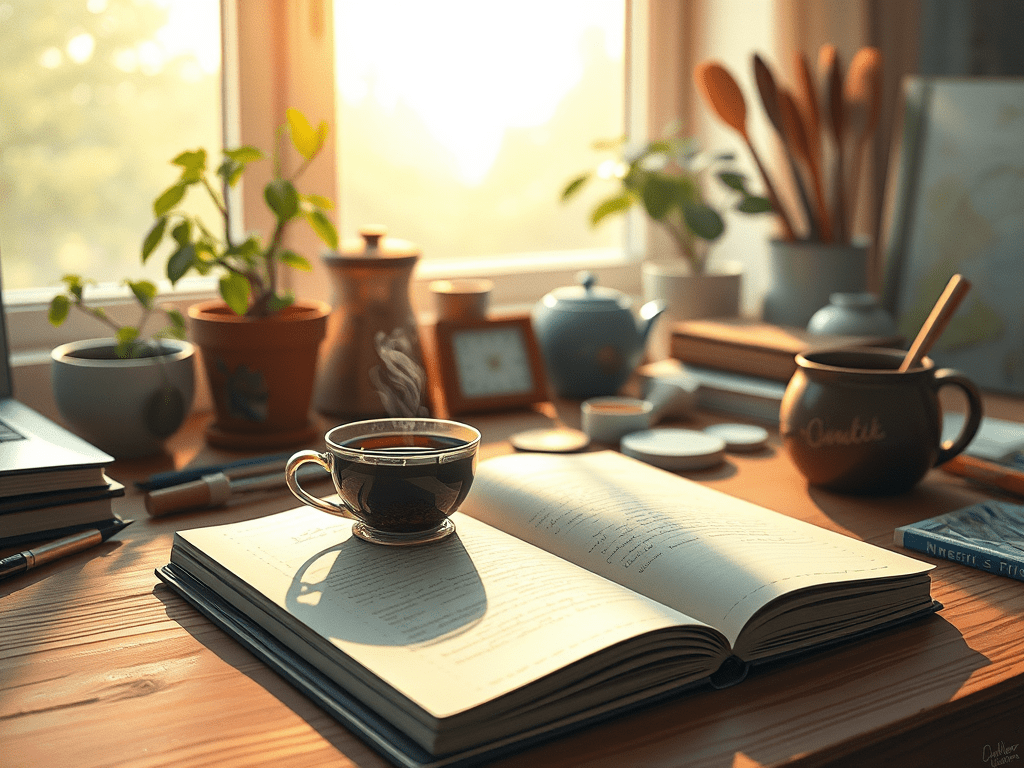

For me the power of the pause is the most important part of any activity, whether it is a creative one or a simple thing like planning my Menu for the day.
I have known people who say that “why do you need to plan a menu? You just go and make something. After so many years of running a house, you should be able to do it with your eyes closed!”
Well it’s never been that simple for me. For me any activity is creative activity- whether it’s writing a book or a poem or even a small haiku for an Instagram post, I need to pause, imagine, toy with words, reflect and then put on paper my thoughts.
The white space that is believed to be a negative space is a very vital and positive area of activity. If I were to plan my white space consciously ( I am, let me be honest, a very impromptu creator so I do not actually construct or build a white space consciously) but yes there is a method to my madness and in retrospect I realise that I have unconsciously structured the pause that is the hidden depth of my foundation of any planned or unplanned activity.
When we were students, we were urged to write our answers or essays with a beginning, middle and an end. A simplistic attitude maybe, but that grid has stood true for so many centuries that all those years of training has deeply ingrained my psyche and I follow it in a nonlinear way.
Before I start any project, I need to have that seed in my mind – it could be just a line “The safe door was just that bit open” and this would usually pop into my mind just before I fall asleep. The next day, amidst the busyness of everyday life it would keep popping up and in the moments that intersperse my day I would play around with it. This then is my beginning.
My middle would be that part where my logical brain would argue with my heart; that it is an idiotic sentence. How can you create a story from something as inane as that? The brain would argue! Then my heart would smile that very secretive smile and say “wait and see! Give me some width!” there would be conversations like this yo-yoing within me while on the outside I would be calm and either indulging in another creative outlet (sketching or stitching…) this is the most difficult part. It has sometimes taken me months before I could formulate my thoughts into coherent action. It is filled with self-doubts, uncomfortable clarity, and restlessness. It is here that I need to push at the resistance that engulfs me overwhelmingly.
The end is where the beginning was. I have at this point decluttered myself and have taken positive steps towards planting that seed. It is here that I do a lot of research on my topic. Frame and reframe my story in a million different ways. Here I use myself and others as a sounding board and then question and requestion my intents. If it’s a story it is straightforward, I begin writing each chapter with the whole picture in front of me (again to be honest there have been many a times that I have erased whole chapters or rewritten whole conversations due to my indulgent emotions during this period). If it is a poem, I have questioned the veracity of what I want to portray or a short story where I have changed the passage of time.
This final moment is my incubation period; the time when my story is born with all its limbs intact.
According to me ‘scheduling’ goes against the grain of any creative venture but white space is necessary for clarity of thought and expression. If you were to think of creativity as an impressionist’s painting as opposed to a portrait that photography mimics now, then white space would definitely be an inherent part of the plan to create.
 The Parallel World